
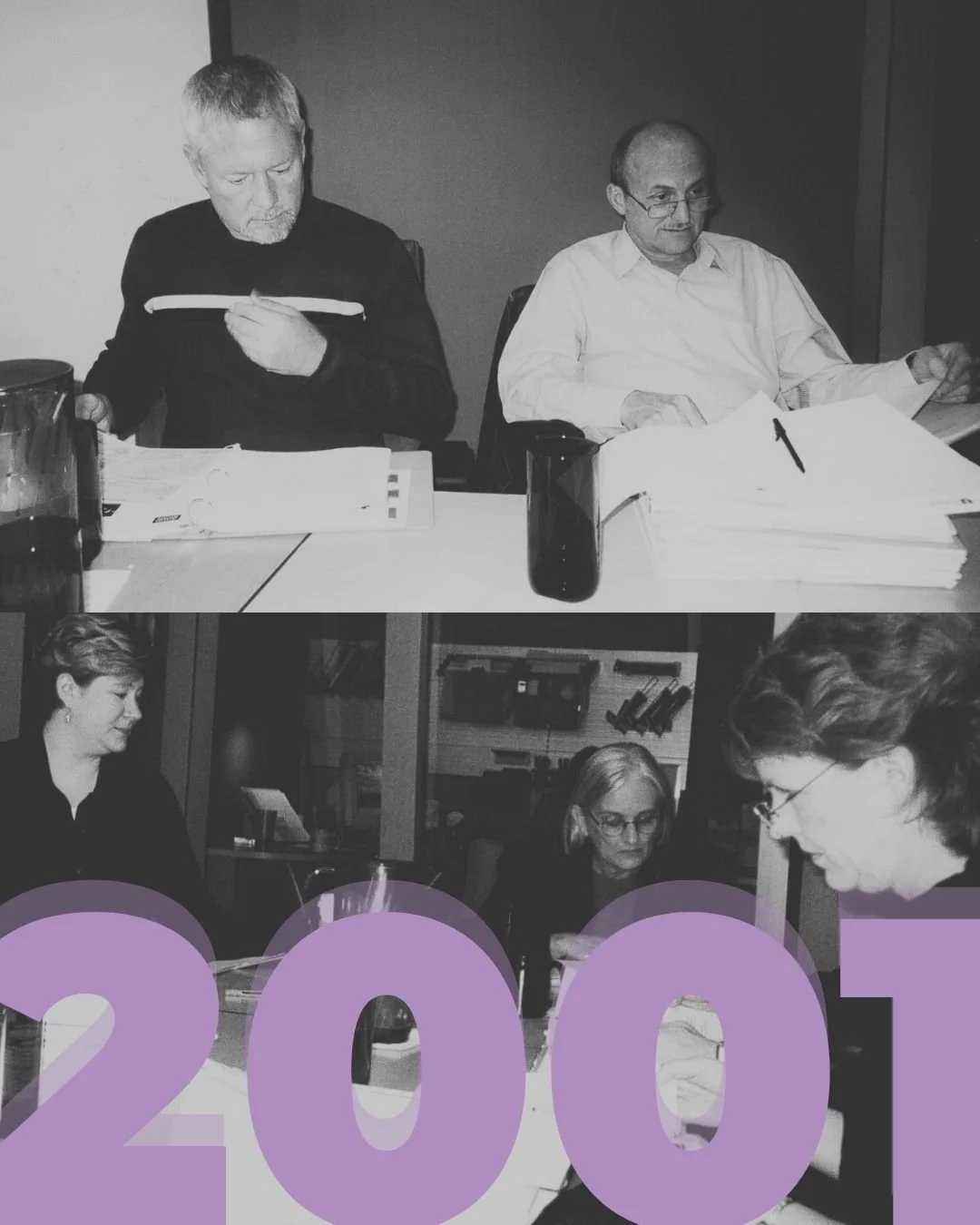
2001: Clarity in a World Disrupted
The year 2001 reshaped the global landscape. Trust was shaken in the aftermath of 9/11, collaboration took new forms with the launch of Wikipedia, and the Euro emerged as a unifying currency across Europe. It was a moment defined by uncertainty—and by the need for stronger systems.
For the Foundation for Interior Design Education Research (FIDER), 2001 became a turning point. Rather than retreat in a turbulent world, FIDER advanced transparency and accountability across the accreditation process. Governance reforms, third-party audits, and strengthened measures for consistency signaled a renewed commitment to clarity at a time when structure mattered more than ever.
These changes weren’t simply procedural. They reflected an understanding that interior design education plays a vital role in shaping environments where people live, learn, and rebuild. As global events underscored the importance of safety, trust, and resilience, accreditation evolved to meet those expectations with rigor and openness.
Why does 2001 matter? Because it marked the moment when design education doubled down on its responsibility to the public. In a world searching for stability, FIDER reinforced a framework that ensured quality, transparency, and integrity for every accredited program.
The reforms of 2001 stand as a defining chapter in CIDA’s history—evidence that even in disruption, design education can lead with purpose and clarity.