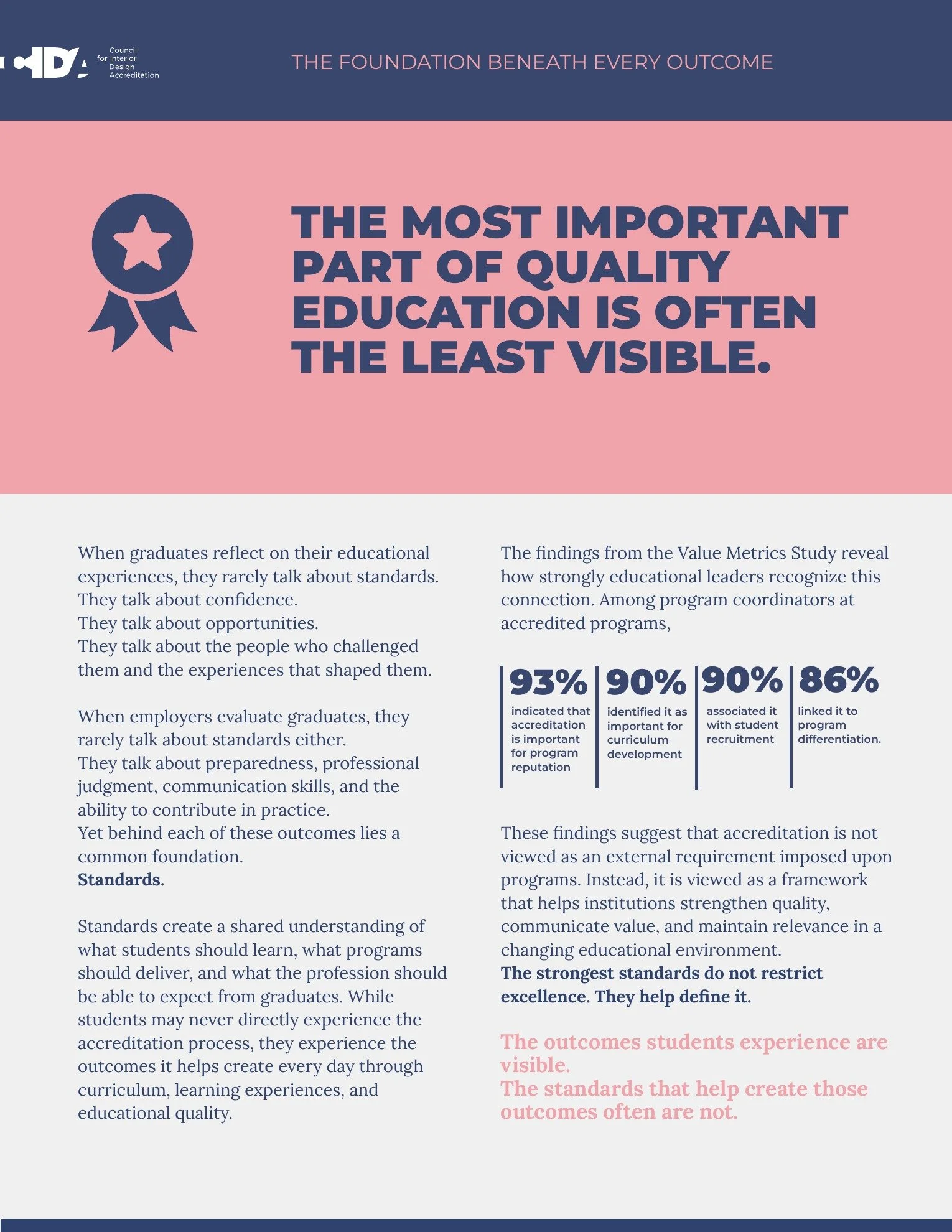

CIDA accreditation standards provide a foundation for quality interior design education, helping programs prepare graduates for an evolving profession while maintaining consistent educational expectations. Findings from the 2025 Value Metrics Study highlight the important role accreditation plays in strengthening program reputation, guiding curriculum development, and supporting student success. Among accredited program coordinators, 93% identified accreditation as important to program reputation, while 90% recognized its importance to curriculum development.
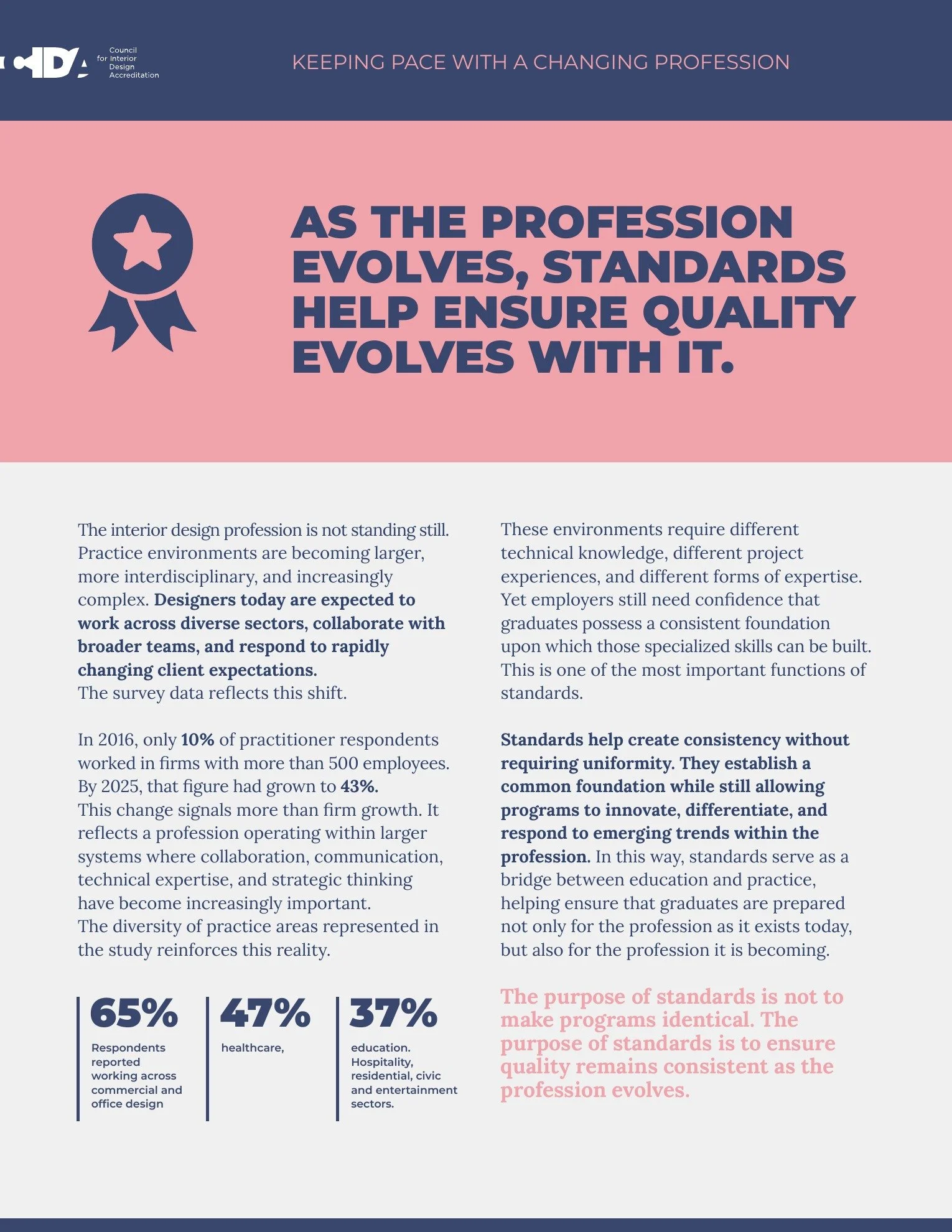
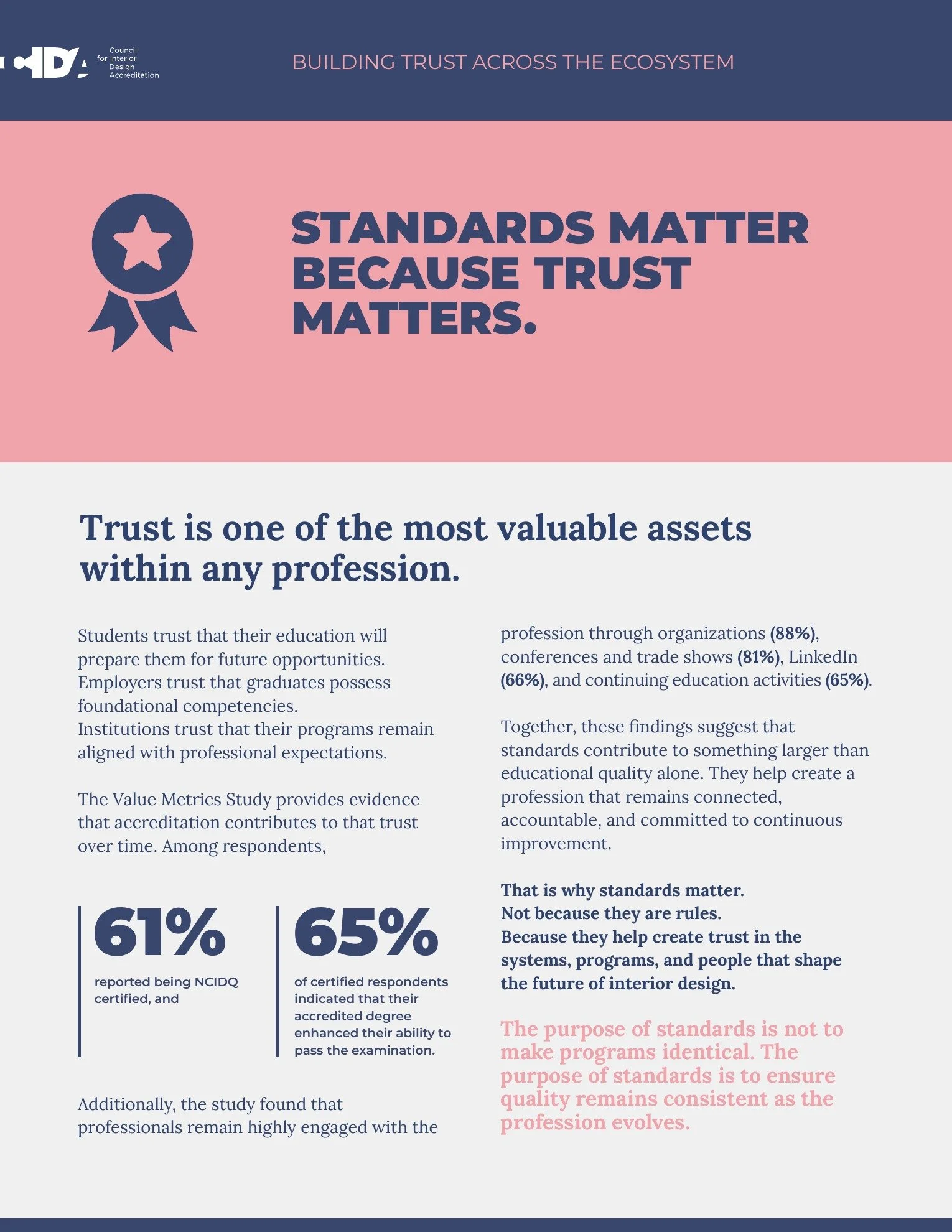
As interior design practice becomes increasingly complex and interdisciplinary, accreditation standards help bridge education and professional practice by establishing shared expectations while allowing programs to innovate and adapt. The study also highlights the connection between accredited education and professional advancement, with 65% of NCIDQ-certified respondents reporting that their accredited degree enhanced their ability to pass the examination.
Together, these findings reinforce the value of accreditation standards in supporting educational quality, professional preparedness, and confidence in the future of interior design.