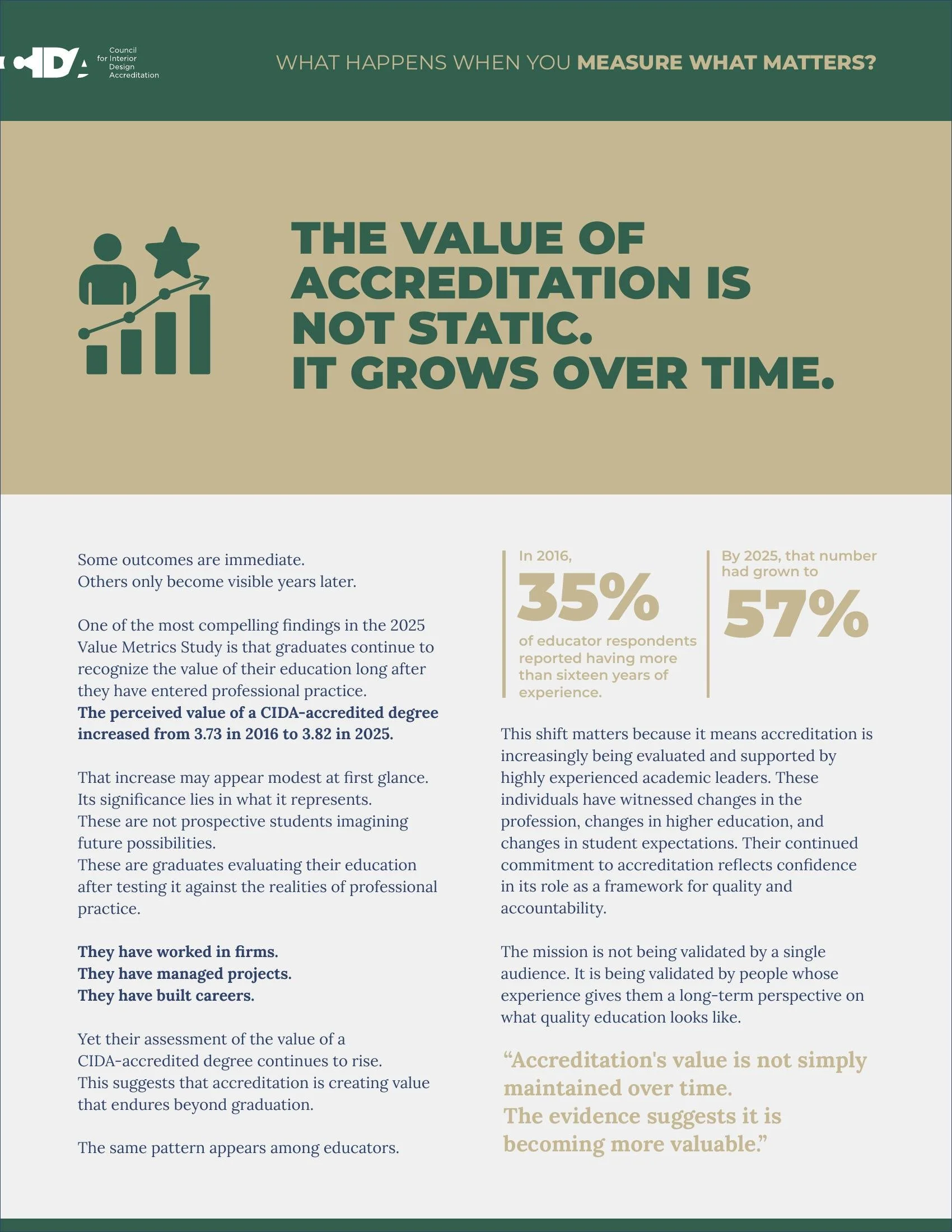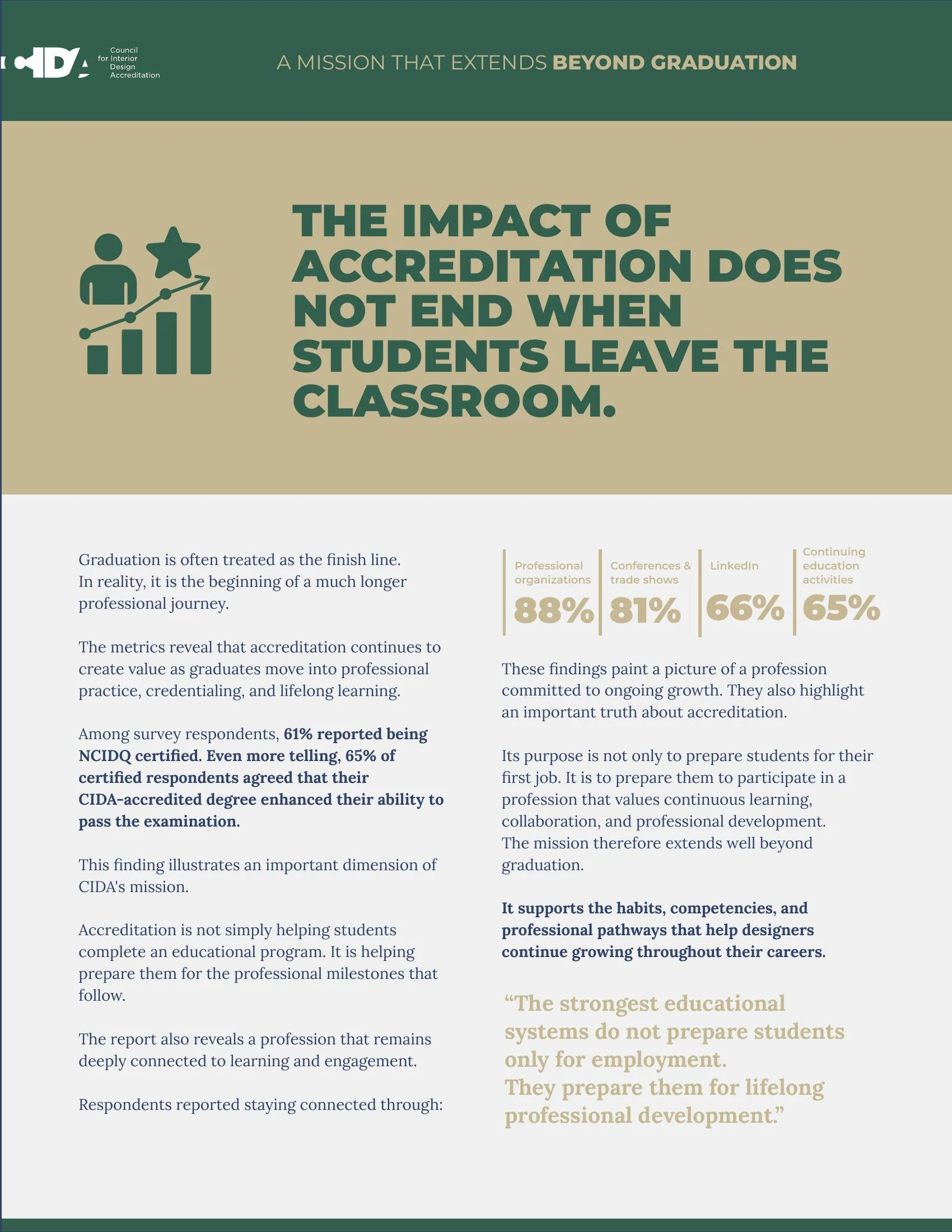

The 2025 Value Metrics Study demonstrates that the impact of CIDA accreditation extends well beyond the classroom and continues throughout a graduate’s professional journey. Graduates increasingly recognize the value of their CIDA-accredited education after entering practice, suggesting that the benefits of accreditation become more apparent as designers build careers, take on greater responsibilities, and experience the evolving demands of the profession. The study also highlights the role accreditation plays in preparing graduates for important professional milestones, including NCIDQ certification, while supporting continued engagement through professional organizations, conferences, continuing education, and other opportunities for lifelong learning.
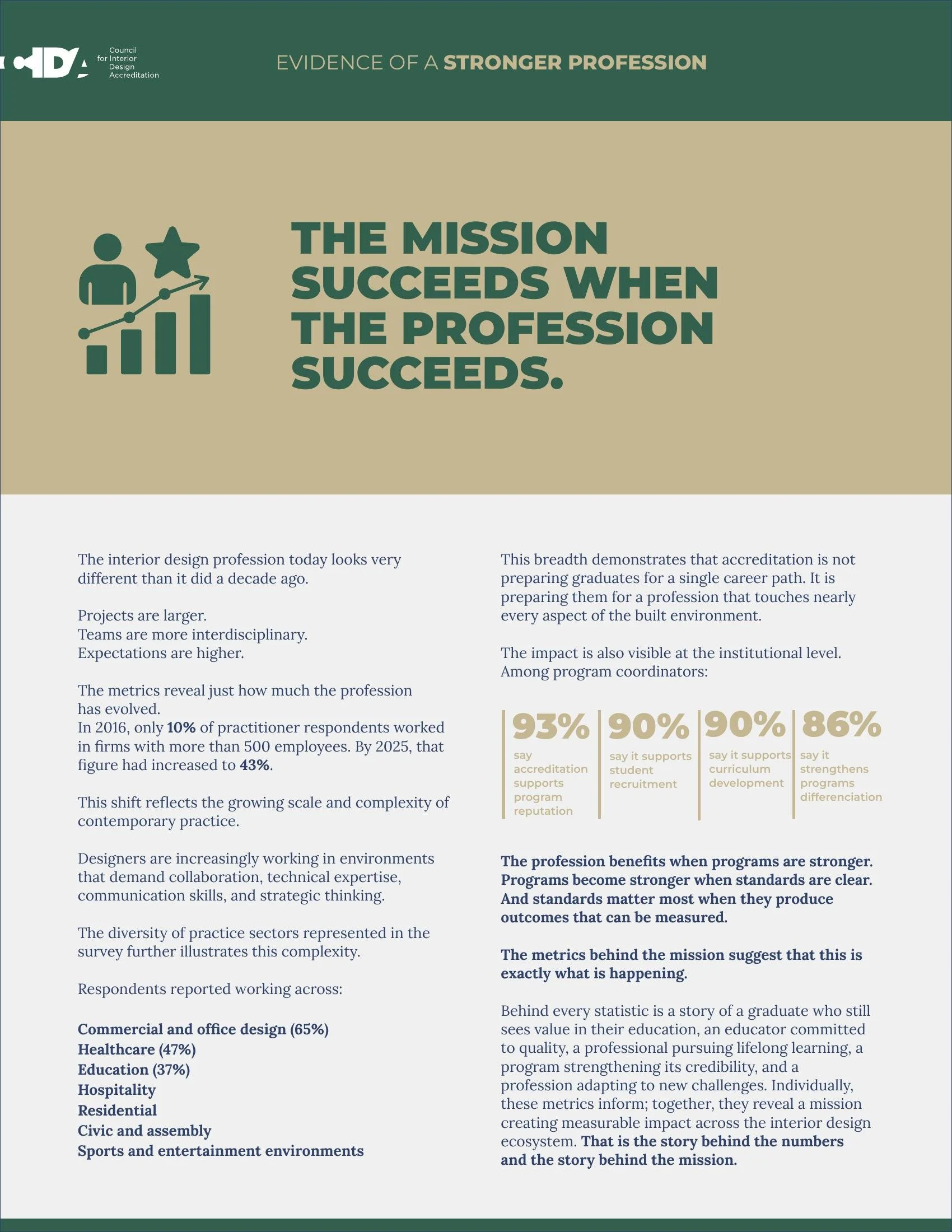
The findings also reflect a profession that has grown increasingly complex and interdisciplinary. Interior designers are working across a wide range of practice sectors and in environments that demand collaboration, technical expertise, communication skills, and strategic thinking. CIDA accreditation helps prepare graduates to navigate this changing landscape rather than preparing them for a single career path. In doing so, it supports the knowledge, competencies, and habits that allow designers to continue learning and growing throughout their careers.
The value of accreditation is also evident at the program level. Program coordinators report that accreditation supports program reputation, student recruitment, curriculum development, and differentiation. Together, these findings illustrate the interconnected impact of CIDA’s mission: strong standards contribute to stronger educational programs, stronger programs prepare graduates for successful and evolving careers, and well-prepared graduates contribute to a stronger interior design profession. The 2025 Value Metrics Study provides measurable evidence that the value of CIDA accreditation is not limited to a student’s education—it continues to create impact across the interior design ecosystem over time.